
Cyberattacks are no longer slow, methodical heists. They’re smash-and-grab operations at ludicrous speed. According to ReliaQuest, attackers can move laterally inside your network in just 27 minutes, with an average of 48 minutes. That’s less time than it takes to find a movie on Netflix, decide you don’t actually want to watch it, and end up scrolling TikTok instead.

Let’s put that in perspective: If someone broke into your office, you’d probably notice. But in the digital world, attackers waltz through your infrastructure faster than IT can finish its morning coffee, and before you even realize something’s up, they’re two departments over stealing sensitive data like it’s a Black Friday sale.

So, what’s making lateral movement so fast? A few culprits:
1. The IoT Dumpster Fire
The Internet of Things (IoT) was supposed to make our lives smarter. Instead, it turned enterprise security into an all-you-can-hack buffet. Zscaler’s ThreatLabz reports a 45% year-over-year spike in IoT malware attacks—because, shocker, all those smart fridges and connected coffee makers aren’t exactly Fort Knox.
It’s not just consumer gadgets either. Businesses are drowning in IoT devices: security cameras, smart lighting, even industrial sensors. And since many of these barely have security baked in, they make for fantastic entry points. Attackers love them. It’s like leaving your back door open with a neon sign that says “Come on in, we’ve got data!”
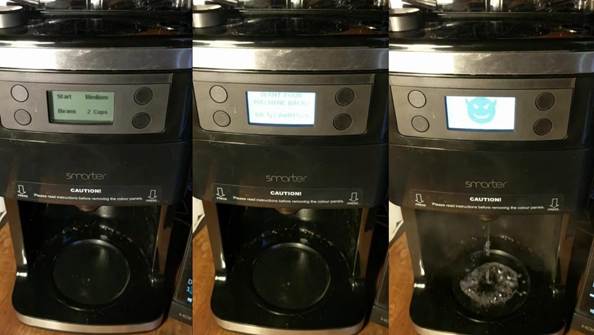
Why do companies still use insecure IoT? Because ripping out “smart” security cameras and replacing them with secured ones is expensive, and nothing says “we care about cybersecurity” like a budget meeting that ends with ‘just accept the risk.’
2. AI is Helping the Bad Guys Too
Generative AI (GAI) and machine learning were supposed to make security smarter. Instead, they’re arming attackers with better, faster, and more creative ways to mess with your network.

The UK’s National Cyber Security Centre (NCSC) is already warning that AI is refining malware, helping hackers find vulnerabilities, and accelerating lateral movement. In other words, attackers aren’t just guessing where to go next—they’re letting AI crunch the numbers for them. It’s like having an evil Siri whispering, “I found five unpatched servers nearby. Would you like to exploit them now or set a reminder for later?”
And here’s the kicker—we’re making it easy for them.
Compounding these challenges is the persistent issue of unpatched software vulnerabilities. Despite the availability of patches, many organizations delay or neglect their implementation, leaving systems wide open. A 2019 Ponemon Institute survey found that 60% of breach victims were compromised due to known vulnerabilities they hadn’t patched. That’s right—attackers didn’t need cutting-edge zero-days, just lazy IT processes.
If you’re still rolling your eyes at the idea of patching, just remember: hackers don’t break in, they log in—often through a vulnerability that had a fix available six months ago.
3. Your “Perimeter” is Dead. Has Been for a While.
Remember when security was all about firewalls and VPNs? Good times. Too bad attackers don’t care about perimeters anymore. If your security plan still assumes you can keep threats outside the walls, you’re playing medieval defense in an age of cyber ninjas who teleport straight to your database.

Once attackers get inside, they don’t need to break anything—they just move sideways, blending in like an employee who “forgot their badge” but somehow has full admin access. And since most companies still have way too much implicit trust inside their networks, stopping lateral movement is basically hoping attackers will trip over a cable and knock themselves out.
The Fix: Zero Trust, Because Trust is for Suckers
If attackers are moving faster than ever, then the security model needs a serious upgrade. That’s where Zero Trust Architecture (ZTA) comes in.
Zero Trust operates on a simple but brutal philosophy: “Trust no one. Verify everything.” Every user, every device, every request—doesn’t matter if it’s coming from inside the network or outside, it gets scrutinized. The goal? Make lateral movement a nightmare for attackers.
With Zero Trust, your network stops being a big, open-plan office and becomes a series of locked rooms, where every door requires verification. An attacker getting in is bad, sure, but if they can’t go anywhere, you’ve already won half the battle.
The Other Fix: You Need Eyes Everywhere
Zero Trust isn’t enough on its own. You also need detection and response that works in real time—because no matter how good your defenses are, something will slip through. That’s where Managed Detection and Response (MDR) comes in.
MDR is like having a team of hyper-caffeinated security analysts and AI-powered sensors watching your network 24/7. It spots anomalies, flags sketchy behavior, and calls in the cavalry before attackers can get too comfy.
Here’s the winning combo:
✔ Zero Trust locks attackers down.
✔ MDR catches them in the act.
✔ You stop lateral movement before it turns into a disaster.
Final Thought: Slow Security is Dead Security
They say “slow and steady wins the race.” That’s great for tortoises, but in cybersecurity? Slow gets you breached.

If your security posture isn’t as fast and adaptive as the attackers coming for you, you’re already behind. The only way forward is to embrace Zero Trust, adopt real-time detection, and stop thinking like it’s 2015. Because in this fight, speed isn’t optional—it’s survival.
Now, go lock down your network before an attacker finishes this article, takes a sip of Red Bull, and owns your Active Directory.